Andersen 100 Series Sliding Door Installation: A Comprehensive Plan (Updated 03/26/2026)
Andersen windows represent a significant investment, demanding precise installation for optimal performance and longevity; these instructions will guide you through each crucial step.
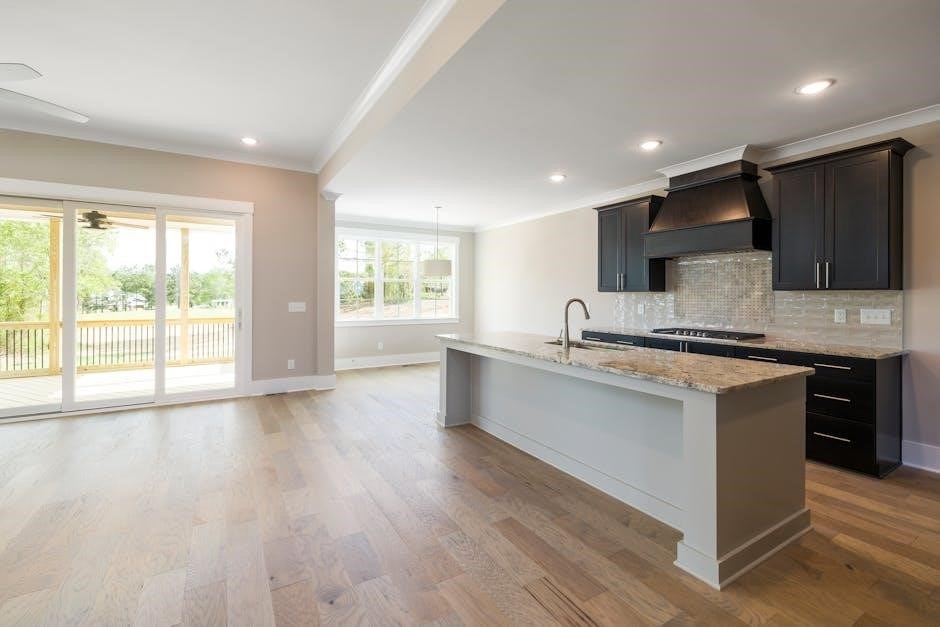
Andersen’s 100 Series sliding doors offer a blend of contemporary style, durability, and energy efficiency, making them a popular choice for homeowners. Constructed with Fibrex® composite material – a fusion of wood fibers and polymer – these doors resist warping, cracking, and corrosion, requiring minimal maintenance.
These doors are available in various sizes, configurations, and finishes to complement diverse architectural styles. Proper installation is paramount to realizing the full benefits of these doors, ensuring smooth operation, airtight seals, and long-term performance. This comprehensive guide details the process, from initial preparation to final inspection, providing clear instructions for both DIY enthusiasts and professional installers. Investing in quality installation safeguards your investment and enhances your home’s comfort and value.
Tools and Materials Required for Installation
Successful Andersen 100 Series sliding door installation demands a specific toolkit and materials. Essential tools include a level (4ft & 2ft), measuring tape, square, drill with various bits, screwdriver set, hammer, utility knife, and safety glasses. A power saw (circular or reciprocating) is needed for rough opening adjustments.
Materials encompass flashing tape, shims (composite or wood), exterior-grade sealant, screws (appropriate length for framing), and potentially, wood blocking for reinforcement. Don’t forget a caulk gun, and potentially, insulation to fill gaps. Having these readily available streamlines the installation process, minimizing delays and ensuring a professional finish. Always verify compatibility with Andersen’s specific recommendations.
Pre-Installation Preparations: Site Assessment
Before commencing Andersen 100 Series sliding door installation, a thorough site assessment is paramount. Verify the rough opening dimensions against the door unit specifications – accuracy is crucial. Inspect the sill for levelness and structural integrity; any deficiencies must be rectified.
Check surrounding wall framing for plumb and squareness. Identify and address any obstructions within the opening, like old nails or debris. Evaluate the exterior cladding for proper weather protection and ensure adequate clearance for flashing. Confirm the availability of power and proper lighting for safe and efficient work. A detailed assessment prevents costly rework later.
Removing the Old Sliding Door (If Applicable)
Carefully remove the existing sliding door, starting with the interior trim and casing using a utility knife to score the paint and a pry bar for gentle removal. Disconnect and detach the door panels from the frame, supporting their weight to prevent damage.
Next, remove the old door frame, carefully severing any caulking or fasteners. Inspect the rough opening for any rot or damage, addressing these issues before proceeding. Dispose of the old materials responsibly. Ensure the opening is clear of debris and ready for the new Andersen 100 Series door unit.
Preparing the Rough Opening
Thorough preparation of the rough opening is critical for a successful Andersen 100 Series sliding door installation. Begin by clearing away any remaining debris from the previous door removal. Inspect the framing for plumb, level, and squareness – correcting any deviations is essential.
Ensure the opening’s dimensions precisely match the new door unit’s specifications. Address any gaps or irregularities with shims or additional framing. Proper preparation prevents future operational issues and ensures a weather-tight seal. A well-prepared opening guarantees a smooth and efficient installation process, maximizing the door’s performance.
Ensuring Proper Dimensions and Squareness
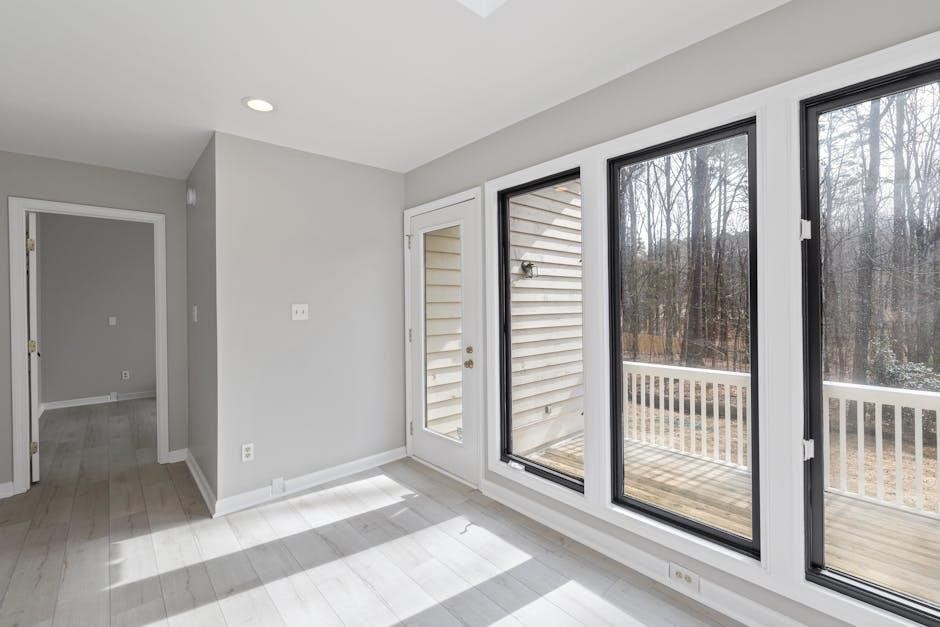
Accurate measurements are paramount; verify the rough opening’s width and height against the door unit’s specifications, allowing for a small tolerance for shimming. Use a tape measure to confirm dimensions at multiple points. To check for squareness, measure diagonally from corner to corner – these measurements must be equal.
If the opening isn’t square, gently adjust the framing until it is. A non-square opening will cause binding and operational difficulties. Employ a level to confirm the sill and jambs are perfectly plumb and level. Correct any imperfections before proceeding; a solid foundation ensures a flawless installation.
Applying Flashing Tape to the Sill
Proper flashing is critical for preventing water intrusion and protecting the structural integrity of your home. Begin by thoroughly cleaning the sill, ensuring it’s free of debris and dust. Apply a self-adhering flashing tape, extending it up the sides of the rough opening several inches – typically 4-6 inches is recommended.
Overlap the tape at the corners, creating a continuous, watertight barrier. Ensure the tape adheres firmly to the sill and jambs, using firm pressure. Pay close attention to any gaps or imperfections, sealing them with additional tape. This creates a crucial defense against moisture, safeguarding your new door.
Installing the Andersen 100 Series Sliding Door Frame
Carefully maneuver the Andersen 100 Series sliding door unit into the prepared rough opening. Center the frame within the opening, ensuring equal reveal on all sides. This step requires assistance, as the unit can be heavy and unwieldy. Gently lower the frame, avoiding any impact that could damage it or the surrounding structure.
Once positioned, temporarily secure the frame with bracing to maintain its alignment. Before permanent fastening, verify the frame is plumb, level, and square. Accurate placement at this stage is vital for smooth operation and weather-tightness. Double-check all dimensions before proceeding.
Setting the Door Unit into the Opening
Prior to fully inserting the Andersen 100 Series door, inspect the sill for any debris and ensure the flashing tape is correctly applied. With assistance, carefully lift and guide the door unit into the rough opening, centering it to achieve consistent reveals on all sides. Avoid dragging the unit across the sill to prevent damage to the finish or the flashing.
Gently lower the door, checking for any obstructions. Temporary bracing is crucial at this stage to hold the unit plumb and square while you assess its fit. Confirm the door isn’t binding and that the frame sits flush against the rough opening.
Shimming and Leveling the Frame
Once the door unit is braced, begin shimming the frame at multiple points – corners and mid-span – to ensure it’s perfectly plumb, level, and square. Use composite shims, not wood, to prevent rot and maintain dimensional stability. Insert shims between the frame and the rough opening, adjusting them until the frame is consistently aligned.
Check for levelness and plumbness with a spirit level, both vertically and horizontally. Fine-tune the shims as needed, avoiding over-tightening which could distort the frame. Consistent support is vital for smooth door operation and proper weather sealing; prioritize accuracy during this step.
Fastening the Door Frame to the Rough Opening
With the frame shimmed and leveled, secure it to the rough opening using appropriate fasteners. Andersen recommends using screws specifically designed for window and door installation, ensuring compatibility with the frame material and structural integrity of the wall. Drive screws through the frame’s pre-drilled holes and into the wall framing, maintaining consistent spacing.
Avoid over-tightening the screws, as this can compress the shims and distort the frame. Ensure screws penetrate deeply into the framing members for a secure hold. Regularly re-check for plumb and level as you fasten, making minor adjustments to shims if necessary. A properly fastened frame is crucial for long-term stability.
Installing the Sliding Door Panel(s)
Carefully lift the sliding door panel(s) and align the rollers with the tracks within the frame; Gently guide the panel into the track, ensuring the rollers seat properly. You may need to slightly lift the panel to overcome initial friction. Repeat this process for any additional panels, following the manufacturer’s specified order – typically the stationary panel first.
Once the panels are in place, verify they move smoothly within the tracks. Avoid forcing the panels, as this could damage the rollers or tracks. Check for any obstructions that might hinder movement. Andersen doors often have removable panels for easier installation; consult the specific guide.
Adjusting the Door for Smooth Operation
Smooth gliding is crucial; Andersen 100 Series doors often feature adjustable rollers. Locate the adjustment screws – typically found near the bottom of the door panel. Use a screwdriver to fine-tune the roller height, raising or lowering it to achieve optimal contact with the track. Adjust incrementally, testing the movement after each adjustment.
If the door binds or feels uneven, address alignment issues. Check the frame for squareness and shim as needed. Minor adjustments to the strike plate can also improve latching. Consistent operation requires careful attention to detail; refer to the Andersen manual for specific adjustment procedures.
Adjusting Rollers and Tracks
Andersen 100 Series sliding doors utilize adjustable rollers for smooth operation. Begin by identifying the roller adjustment points, usually accessible screws located on the door panel’s underside. Turning these screws alters the roller height, impacting how the door engages with the track. A slight lift can alleviate dragging, while lowering may correct excessive play.
Inspect the tracks themselves for debris or obstructions. Vacuuming or wiping them clean ensures unimpeded roller movement. For stubborn issues, a silicone-based lubricant can reduce friction. Remember to adjust rollers incrementally, testing the door’s glide after each modification to prevent over-adjustment and maintain optimal performance.
Addressing Alignment Issues
Misalignment can manifest as binding, difficulty latching, or uneven gaps. Begin by visually inspecting the door within the frame, noting any points of contact or stress. Slight adjustments to the frame’s shims, accessible during the fastening stage, can often correct minor deviations. Ensure the frame remains square during these adjustments.
If the door panel itself is misaligned, carefully examine the roller assemblies. Adjusting the rollers (as detailed previously) can sometimes compensate for minor frame imperfections. For significant alignment problems, loosening the frame fasteners and gently repositioning the entire unit might be necessary, followed by re-fastening and re-checking.
Weatherproofing and Sealing the Installation
Effective weatherproofing is crucial for energy efficiency and preventing water damage. Begin by applying a high-quality, exterior-grade sealant around the perimeter of the door frame where it meets the exterior cladding. Pay close attention to corners and joints, ensuring a continuous bead. Inspect the sill area carefully, adding sealant as needed to create a watertight barrier.
Andersen recommends using a sealant compatible with the door’s materials to avoid any adverse reactions. Additionally, check the weather stripping along the door panel’s edges; ensure it’s properly seated and free from damage. Replace any worn or compressed weather stripping to maintain a tight seal against drafts and moisture.
Installing Interior Trim and Casing
Begin by measuring and cutting the interior casing to fit around the door frame, ensuring accurate miters for a professional finish. Apply a bead of paintable caulk to the back of the casing before attaching it to the frame with finishing nails. Space the nails approximately every 8-12 inches for secure attachment.
Once the casing is in place, fill the nail holes with wood filler, allow it to dry, and sand smooth. Apply a primer coat followed by two coats of paint or stain to match your interior décor. Consider installing a door stop to prevent the sliding panel from accidentally moving past its tracks. This adds a refined look and enhances functionality.
Final Inspection and Testing
Thoroughly inspect the entire installation, verifying all fasteners are secure and the frame is flush with the wall. Test the sliding door’s operation, ensuring smooth gliding along the tracks without binding or resistance. Check for any gaps around the frame where air or water could penetrate; re-caulk as needed.
Confirm the locking mechanism engages properly, providing a secure closure. Inspect the weatherstripping for complete contact, preventing drafts and moisture intrusion. Finally, operate the door several times, simulating everyday use, to identify any potential issues before considering the installation complete. Document your inspection for warranty purposes.
Common Installation Problems and Troubleshooting
Misalignment often causes binding; carefully re-shim and level the frame, adjusting rollers for smoother operation. Water leaks typically stem from inadequate flashing or sealant – reapply these meticulously, ensuring complete coverage. Difficulty locking can indicate frame distortion; check for squareness and tighten fasteners.
Condensation between panes suggests a seal failure, requiring professional attention. Track issues, like debris buildup, hinder sliding; clean thoroughly and lubricate. Always consult the Andersen documentation for specific troubleshooting steps. Remember, attempting complex repairs without expertise can void the warranty.
Andersen Warranty Information for 100 Series Doors
Andersen offers a comprehensive warranty on its 100 Series sliding doors, covering defects in materials and manufacturing for a specified period. Proper installation is crucial to validate the warranty; always adhere to their guidelines. The warranty typically includes coverage for glass breakage, hardware malfunctions, and finish deterioration.
However, damage resulting from improper installation, misuse, or lack of maintenance is generally excluded. Keep your purchase receipts and installation documentation as proof of purchase and compliance. Register your door online with Andersen to streamline any future warranty claims. Detailed warranty information is available on the Andersen website.
Safety Precautions During Installation
Prioritize safety throughout the Andersen 100 Series sliding door installation. Always wear safety glasses to protect your eyes from debris, and use work gloves to prevent hand injuries. Be mindful of lifting heavy door units; employ proper lifting techniques or seek assistance. Ensure the work area is clear of obstructions and well-lit.
When using power tools, follow manufacturer’s instructions and wear appropriate hearing protection. Exercise caution when working at heights, utilizing a stable ladder or scaffolding. Disconnect power to any electrical wiring in the vicinity of the installation. Proper handling of glazing materials is essential to avoid cuts.